Best Time to Visit Southeast Asia in 2026: Avoiding Monsoon Season
I landed in Bangkok on a sticky August afternoon convinced I’d cracked the code—cheap flights, half-empty temples, and the kind of sweat that makes you feel alive. By 4 p.m., the sky turned purple-black and unleashed a sheet of water so dense I couldn’t see the tuk-tuk two meters ahead. The driver just shrugged and said, “Monsoon, same time tomorrow.” He was right. That trip taught me more about timing than any guidebook ever could, and it’s why I’m writing this now—to help you find the best time of year to visit Southeast Asia avoiding monsoon chaos without missing the magic. 2026 is shaping up with predictable seasonal rhythms, but the trick isn’t dodging rain entirely—it’s knowing where to be when. Let’s walk through the maze together.
The Monsoon Maze: Understanding Southeast Asia’s Seasonal Rhythms
Southeast Asia doesn’t have one monsoon—it has a tangle of overlapping wet and dry seasons that shift by latitude, coastline, and elevation. When I first tried to pin down the best time of year to visit Southeast Asia avoiding monsoon for a multi-country trip, I kept hitting contradictions. Northern Thailand’s rainy season is Bali’s dry spell. Vietnam’s central coast catches sideways rain in November while the Mekong Delta basks in sunshine. The reason? Two major wind systems—the southwest monsoon (roughly May to October) and the northeast monsoon (November to March)—collide with mountain ranges and peninsulas, creating microclimates that defy a single answer.
Let’s break it down simply. The southwest monsoon sweeps moisture from the Indian Ocean across Thailand, Cambodia, Laos, Vietnam, and Myanmar, drenching west-facing coasts like Phuket and Yangon. Meanwhile, the northeast monsoon brings drier air from China, but it picks up moisture over the South China Sea, soaking east-facing shores like Vietnam’s Hue and Malaysia’s Tioman Island. Indonesia and the Philippines have their own equatorial patterns, with rainfall peaking when the Intertropical Convergence Zone (ITCZ) hovers overhead—typically December to February for much of Indonesia, and July to September for the Philippines’ western seaboard.
What this means for your 2026 planning: There is no single month that’s dry everywhere, but there are windows where the most popular routes—say, Bangkok to Angkor Wat to Hanoi—see minimal disruption. Based on historical averages and my own trip logs, the safest broad bets fall between November and February for the mainland, and April to October for much of Indonesia. But even within those bands, you’ll find pockets of rain. The key is to think regionally, not continentally. I’ve learned to check three things before booking: the dominant monsoon for that specific coast, the altitude (highlands like Dalat or Sapa get cooler drizzle), and the shoulder months—those transitional weeks when crowds thin and storms haven’t fully settled in.
A quick reality check: The World Meteorological Organization’s seasonal outlooks suggest 2026 will follow typical patterns, with no major El Niño or La Niña anomalies forecast as of early 2026. That means historical averages are your friend. But I always build in a buffer—expect at least one surprise downpour even in the “dry” season, because tropical weather loves a plot twist.
Dry-Season Sweet Spots: Your Month-by-Month Guide for 2026
When I plan a big Southeast Asia loop, I literally draw a calendar and map rain patterns by month. It’s nerdy, but it works. Here’s how 2026 looks for the best time of year to visit Southeast Asia avoiding monsoon across the marquee destinations, based on decades of climate data and a few hard-won personal lessons.
November–February: The Golden Window for Mainland Southeast Asia. This is when Thailand, Cambodia, Laos, and Vietnam shine. In Chiang Mai, November mornings are crisp enough for a light jacket, and the rice paddies glow emerald after the rains retreat. I spent New Year’s in Siem Reap once—temples bathed in soft, dry light, with temperatures hovering around 28°C (82°F). For 2026, aim for late November to early February to dodge peak holiday crowds while catching the best weather. The Gulf of Thailand islands—Koh Samui, Koh Phangan—are a notable exception; their rainy season hits October through December, so flip your itinerary and go there in January or February instead.

March–May: The Hot, Dry Pause (With a Catch). Mainland temperatures spike—think 38°C (100°F) in Bagan or Ayutthaya—but rainfall stays low. This is when I head to higher ground: Vietnam’s Sapa or Malaysia’s Cameron Highlands offer mountain cool. Indonesia and the Philippines start drying out nicely. Bali’s east coast, for instance, gets brilliant sun in April and May, perfect for diving. Just avoid Sumatra’s west coast, where the rainy season lingers. A pro move I stumbled on: March in Luang Prabang, Laos, is hazy but magical—the Mekong is low, and you can kayak through misty mornings without a soul around.
June–October: Indonesia’s Prime Time, Mainland’s Monsoon. This is the flip: while Thailand and Vietnam brace for downpours, Indonesia enters its driest stretch. I’ve surfed in Bali in July with offshore winds and barely a cloud, while friends in Bangkok texted photos of flooded streets. The Philippines’ central islands—Cebu, Bohol—also enjoy their sweet spot from June to August, though the eastern seaboard can catch typhoons later in the year. Malaysia’s Langkawi is a wildcard: its “rainy” season (September–October) often means short afternoon showers followed by stunning sunsets, and hotel prices drop 40%.
Shoulder Months: April–May and October–November. These are my secret weapons. In late October 2025, I hiked northern Thailand’s Mae Hong Son loop under brooding skies that never quite broke—lush scenery, empty trails, and that electric pre-storm light photographers chase. For 2026, target early April in Myanmar for Bagan’s temples before the rains, or mid-November in Vietnam’s Ha Giang province when the buckwheat flowers bloom and the weather’s crisp. The trade-off? Some attractions may have reduced hours, and ferry schedules can shift. I always message hotels directly a week before to confirm.
Regional Exceptions: Where to Go During the Monsoon (And Love It)
I used to think “monsoon” meant a ruined trip—until I spent a week in Kerala-style rain on Thailand’s Andaman Coast and discovered the joy of empty beaches and dramatic skies. The best time of year to visit Southeast Asia avoiding monsoon isn’t always about avoiding rain; sometimes it’s about choosing places where the wet season has a softer edge or even adds to the experience. Here are my favorite exceptions for 2026.
Bali and the Nusa Islands (December–March). Yes, it’s rainy season, but Bali’s western monsoon is often overhyped. Rain usually falls in intense bursts late afternoon or overnight, leaving mornings clear. I’ve snorkeled off Nusa Penida in February with 30-meter visibility. The east coast—Amed, Candidasa—is notably drier thanks to Mount Agung’s rain shadow. Plus, the island’s waterfalls roar to life, and the rice terraces look impossibly green. Just skip the south-coast beaches if you’re after pristine sand; they can get trashy from runoff.
Central Vietnam (September–November). Hoi An’s ancient town floods famously in October and November, but Da Nang, just 30 kilometers north, often stays drier. I once rode a motorbike from Da Nang to Hue in early November—caught one 20-minute shower, then had the Hai Van Pass entirely to myself under cotton-ball clouds. The rain keeps crowds away, and you can snag river-view rooms for a third of high-season prices. For 2026, monitor typhoon forecasts closely; central Vietnam’s coast can get hit, so book flexible flights.
Malaysia’s West Coast (May–October). Langkawi and Penang officially enter their rainy season, but it’s a mild one—short, predictable afternoon squalls that break the humidity. I spent a July in George Town once, working from a café while rain lashed the windows, then walking out to brilliant evenings. The real perk: mango season peaks, and you can eat your weight in harumanis for pennies. Avoid the east coast islands (Perhentians, Tioman) during this window—they’re effectively closed for rough seas.
One honest trade-off: monsoon light is a photographer’s dream, but it can mess with outdoor plans. I’ve had two flights delayed by lightning storms in Siem Reap—both times I wished I’d booked morning departures. My rule: during the rainy season, schedule key activities for 8 a.m. to noon, and treat afternoons as bonus time.
Packing and Booking Smart: How to Avoid Monsoon Surprises in 2026
After that drenched Bangkok arrival, I overhauled my entire approach to gear and logistics. Finding the best time of year to visit Southeast Asia avoiding monsoon is half the battle; the other half is being ready when the skies inevitably open up. These strategies are born from soggy mistakes and a few genius hacks I’ve picked up from long-term expats.
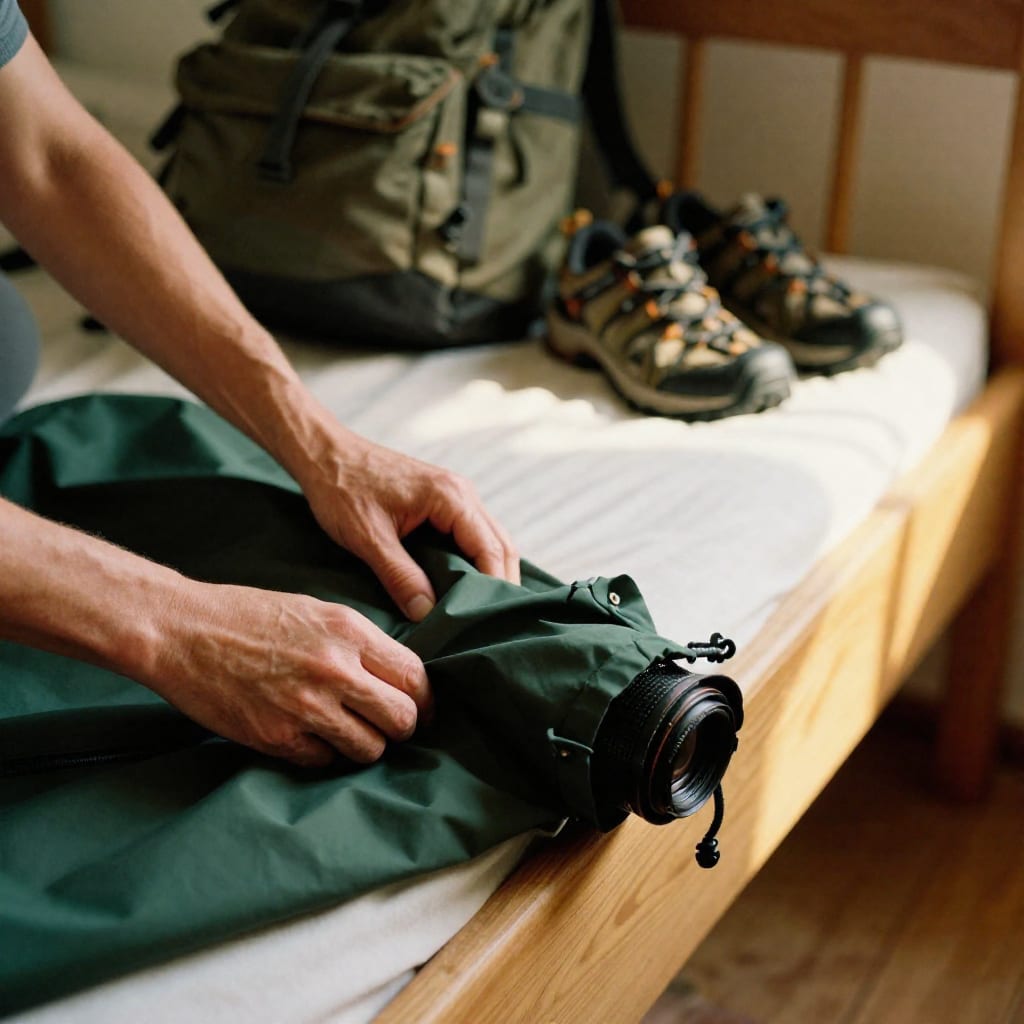
Pack light, pack right. A quality packable rain jacket (not a poncho—they shred in wind) is non-negotiable. I swear by one that weighs 200 grams and stuffs into its own pocket. Quick-dry everything: synthetic tees, nylon shorts, and merino socks that don’t rot after a soaking. The real MVP? A waterproof dry bag for electronics—I learned the hard way when a monsoon flooded my daypack in Luang Prabang and killed a camera. For 2026, consider a small travel umbrella; locals use them constantly, and you’ll look less like a lost tourist.
Book with flexibility baked in. Monsoon seasons often mean lower prices, but I always filter for free cancellation on accommodation platforms and opt for airlines with generous change policies—AirAsia and Scoot have reasonable fee structures if you tweak dates 48 hours out. When I booked a homestay in Hoi An for October 2025, I chose one with sandbags stacked by the door; they clearly knew the drill, and their real-time WhatsApp updates on river levels were more reliable than any weather app. For 2026, lock in key internal flights and first-night hotels, but leave the middle of your itinerary loose. I’ve rerouted from flooded Palawan to sunny Siargao in a single morning because I’d only booked two nights ahead.
Time your flights and ground moves. In monsoon zones, afternoon storms are so reliable you could set a watch by them. I now book all domestic flights for the earliest morning slot—6 a.m. departures are a pain, but they’re rarely delayed. For buses and ferries, the same logic applies: aim to arrive by early afternoon. Once, I took a 3 p.m. ferry from Koh Lanta to Krabi in September and spent four hours gripping a seat as waves crashed over the bow. The 8 a.m. sailing the next day was glassy.
Embrace the local mindset. Southeast Asians don’t fight the monsoon—they flow with it. Download a hyperlocal weather app like Windy (it visualizes rain bands in real time) and check it each morning. Build a “rainy day list” for each stop: a cooking class in Chiang Mai, a spa afternoon in Ubud, a museum crawl in Singapore. I’ve had some of my best travel moments—like learning to make laksa from a Melaka auntie—while thunder cracked outside. Worth bookmarking before your next trip: a simple notes file with backup indoor ideas for each destination.
One final, counter-intuitive tip: don’t over-rely on long-range forecasts. In 2024, I canceled a May trip to Bali based on a dire 30-day prediction—only to watch friends post endless blue-sky photos. Seasonal patterns are guideposts, not scriptures. For 2026, I’ll check NOAA’s monsoon tracking data two weeks out, then pack and go with a flexible mindset. The best trip isn’t the one with perfect weather; it’s the one where you’re ready for anything.